Pastors, are you preaching to children?

I was reading Gentle and Lowly by Dane Ortland and he made a passing reference to the pastor and theologian of the Great Awakening, Jonathan Edwards, preaching to the children in his church.

This was the first time I had heard that. It doesn’t fit how we usually think about the man who preached ‘Sinners in the hands of an angry God’ - he is far too serious surely? It turns out that was normal for Edwards to preach, while everyone was there, to one particular age group. Harvard’s collection of the Works of Jonathan Edwards has counted 3 sermons just for 1-14 year olds between 1739 and 1742 - which is one a year. That doesn’t sound like very many but it is three times as many sermons as he preached specifically to the elderly or to the middle aged. (I should mention that his normal practice seems to have been to preach to everyone there and attempting to apply it to a wide range of his congregants.) It shows how much Edwards valued the children.

We so often say we want our kids and our youth to feel part of the church, but we have difficulty putting that into action - I’m including myself in this. Edwards shows us one way to do this, one way to show them that they are loved and that they’re wanted in your church is to have the pastors (or vicars or elders) teach them. There are a bunch of ways that this could be done:

  • Have a pastor teach in Sunday School as a one off

  • Have a children’s talk in your Sunday Services

  • Preach a sermon for just the kids in your normal service

  • Have an elder give their testimony at a kids event

  • Get church leaders involved in after school clubs

  • Have preachers on the Sunday School rota

What have you already tried and which of these ideas appeal to you?

Ideas for engaging kids in sermons
More ideas for kids in services

If you’re inspired by Jonathan Edward’s example then you should read Ricky Njoto’s article on Three Things Jonathan Edwards Teaches Us About Youth Ministry.

Jesus is the New and Better...

There’s a new series of lessons for Sunday Schools, aged 4-11, and I’m so excited for what it teaches kids about who God is. This is one of my favourite themes in the Bible, I’ve already taught this series in two different churches, and I love how the whole Bible is set up to show us who the Christ would be and then in the New Testament who Jesus is.

I got the idea for this series from this clip of a TIm Keller sermon, and somehow misremembered the title as New and Better instead of True and Better - but I think that New is a category that works better for children anyway.

It is glorious news! That Jesus is honestly the best of all the Bible heroes and that God knows what he’s doing enough to make such an incredible and complicated demonstration of what Jesus would be like.

See the New and Better Series

Epiphany

I remember sitting in my then pastors office as he explained the meaning of Epiphany to me. We got as far as “…and ‘Phany’ means…” before descending into giggles and I don’t remember if we ever finished that conversation.

Since this is much less amusing to explain in writing let’s give it a go:

  • Epi
    is a Greek preposition which doesn’t map on to our English ones very well; it can mean on or above but to is also acceptable and the one that seems to be in use here.

  • Phany
    is also from the Greek meaning to show, to display or to bring to light.

What’s this got to do with January the 6th? Well, it’s the day we celebrate the Wise Men visiting Jesus. Of course, we don’t have exact dates for when this happened in relation to Jesus’ birthday, but it does seem to be closer to 2 years later rather than just 12 days (so maybe we’ve just marked Epiphany for Christmas 2019!) But it is very much something worth celebrating!

Why celebrate Epiphany? The arrival of the Wise Men, from somewhere to the east of Israel, demonstates that this isn’t just a local event or even one solely for the Jews. Christmas is marked by God himself coming to the poor, the lowly, the outcast - Mary, Joseph and the Shepherds, but they’re all Jewish. They’ve been waiting for the Messiah all their lives, and it’s a joy for them to see God’s promises fulfilled. But Epiphany brings the God Man to light for Gentiles, unbelievers, those who lived far away and looked to the stars, not the scriptures to find meaning and purpose. Yet God used what they knew to reveal to them that he had come for them!

On Epiphany we remember that God came for Jews and Gentiles, which is good news for both Jews and Gentiles as we meet the God who came to save the whole world!

Also Happy Christmas to Eastern Orthodox believers in Russia, Egypt, Greece and whereever in the World you’re worshipping today!

Coming Soon in 2022: Planning for Sunday School

I do have an ideal plan for what I would like to do through the year in Sunday School. To no-one’s surprise I’ve never done it and it’s not going to happen this year either. But also I’m not very good at sticking to my plans so we’ll see if that does ever happen…

I have some of a plan for this year - in the Sunday School I’m teaching we’re following the sermon series for the first quarter and I’m super excited about families being able to have conversations over lunch about the passage they’ve both just heard. I’m also interested to see if I’ll feel more or less like I’m missing out on services when we’re doing the same thing.

On the blog we’re starting with lessons from the Old Testament - how Jesus is the New and Better version of many people (and occasionally things) in the OT - this is one of my favourite themes and it’s so good I’ve taught it twice! After that we’re moving into Esther, which is such a good book and there’ll be lots of great conversations to be had, then just before the summer I’ll share a Holiday Club plan with you! I haven’t decided yet which of them it’s going to be but I should probably go New Testament for reasons of balance so maybe you can look forward to some Acts then.

That’s as far as I can plan at the moment; and there are, of course, a few surprises coming that I haven’t yet shared with you - we’ll see how well the Disorganised Sunday School Blog lives up to it’s name!

Bigger on the Inside: A Special Doctor Who Christmas

"It's bigger on the inside!" is the cry of everyone going into the TARDIS for the first time. Through those blue wooden doors is a space that could make your brain dribble out of your ears, metaphorically, and possibly quite literally as well. It's an impossible, unimaginable thing and yet, there you are. When you should be in a space smaller than a student bedroom, you're in a room large enough for a school assembly with an untold number of corridors leading to rooms including, but not limited to, a library, a wardrobe and even a swimming pool.

It's life changing for the Doctor’s companions. Rose Tyler and Bill Potts get to exchange their mundane jobs for the beauty of the universe and saving the world. Even for Dr Martha Jones and Police Officer Yaz Kahn traveling in the TARDIS with the Doctor completely changes how they see the world. As the 12th Doctor himself says (when he's pretending it's his first time):

"My entire understanding of physical space has been transformed! Three-Dimensional Euclidean geometry has been torn up, thrown in the air and snogged to death! My grasp of the universal constants of physical reality has been changed [dramatic pause] forever."

And we haven't even mentioned that when you exit through those doors you could be anywhere in time and space. If only such a place existed, outside of good editing and great set design. If only, if only, bigger on the inside were possible...

The worlds of Harry Potter and Mary Poppins use magic to create rooms, and extremely useful bags, which are bigger on the inside. And don’t we all wish that we could have a bag like that? Unfortunately, we can’t use magic outside of stories and, as the 13th Doctor makes clear, science is not an option available to us either:

Graham: How do you fit all this stuff inside a police box?
Doctor: Dimensional engineering.
Yaz: You can’t engineer dimensions.
Doctor: Maybe you can’t.

The Doctor is right, we live within the dimensions of both time and space and there’s no sign of us being able to change that.

But good fiction does reflect reality and in the final book of the Narnia series, The Last Battle, CS Lewis mentions a time that ‘bigger on the inside’ happened in the real world. On entering a stable that opens not into the inside of a stable but an entire world, Lucy comments, "In our world too, a stable once had something inside it that was bigger than our whole world." Narnia may be fictional, but Lucy was right, in our world you could have seen that stable, about two-thousand years ago in the little town of Bethlehem.

Inside that little town would have been a small unremarkable house, and inside that small house would have been a room which was used in the winter as a stable. Any sheep would have been moved outside (and cared for by shepherds) in order to make enough space for a young couple to come and stay. And inside that room the small food trough would have been emptied of food and lined with something soft and warm so that it could be a safe place for a baby boy. Inside that baby would have been all the potential of a human life; he might grow up to be great or good or kind or clever, just like any other baby.

Unlike any other baby, Jesus had in him something much bigger than any other human. As well as being totally human he was God. The God who made the stars and planets now looks up at them from the earth. The eternal God in a growing body, and a mortal one.  The God who made humanity to be like him, became one of us, just like us, because he wanted to be with us. God incarnate; God made flesh; God with us; Emmanuel. Could there have been anything more incredible, more impossible, more strange or more beautiful inside that stable than what was actually there?

As she realises that the TARDIS is bigger inside than out, Bill is filled with amazement, asking “How is that possible? How do you do that?” The Doctor’s robotic companion, Nardole, carefully breaks it down for her:

Nardole:  First you have to imagine a very big box fitting inside a very small box.
Bill: Okay.
Nardole: Then, you have to make one. It's the second part people normally get
stuck on.

There are similar questions to ask about the incarnation: How is it possible for Jesus to be both human and God? How does all of God’s glory and goodness fit inside a baby? These are fantastic questions, but the answers can be as hard to understand as making a very big box fit inside a very small box. The questions that change how we see God, the world and ourselves, the questions that change our lives, begin with a different word: why? Why did God become a human like me? Why would he choose to live on earth within the boundaries of the dimensions he created? Why would he exchange all the beauty of heaven for a mundane human life? Why was rescuing me important enough that he would do the impossible? And, of course, why does this matter?


This new version of Away in a Manger is not only musically superior to the one we all know from our childhood but the lyrics have been dramatically altered to reflect some of the wonder of that first Christmas baby and his almost paradoxical nature.

Away in a Manger (All Glory to Jesus)

If you enjoyed the mix of Doctor Who and big questions of faith and wish I’d said more about how that connects to what Christians believe. This amazing and short book by Rebecca McLaughlin does exactly that; answering some of the questions you might have off the back of this: Was Jesus Even a Real Person? How Can You Believe in a Virgin Birth? Can We Take the Gospels Seriously? And Why Does It Matter?

You can get the ebook version of Is Christmas Unbelievable? here for less than £2 which is a very good price for some big answers to some very big and important questions.

Love Came Down - Interview with Author Bethan Lycett!

God loved the world so much, that he gave his one and only Son… is the central theme of Love Came Down by Bethan Lycett, and I was so excited to be able to ask her a few questions about her book. Do read on if you’re looking a book to give away this Christmas:

Tell us three things we should know about you...

I am a wife, and mum to 3 boys. I am someone who loves cooking and crafting. I’m a big maths and engineering geek having taught maths for 13 years (I do still tutor maths and mark exams since leaving the classroom 3 years ago).

What inspired you to write Love Came Down?

I wrote a nativity book 3 years ago and the aim of that book, The Nativity, was to tell a more biblical account of the nativity story without extra things that have crept in over but aren’t mentioned in the bible (donkeys, kings, etc) and also to include things that often get missed out (Elizabeth, Zechariah, the trip to the temple with Anna and Simeon etc). Having written that I didn’t think that I would write another Christmas book, I’d almost ticked that box. So when I was asked if I had any ideas for a Christmas book my initial answer was no!
But I decided that a book which tied together the whole story of the bible would work. So in some ways, Love Came Down isn’t actually a Christmas book, its a book that tells the story of the whole Bible through John 3:16 as the basis, but obviously that includes Christmas when God sent his only Son! It is well suited to give away at Christmas, but actually is a book I hope is read all year round.

Why did you decide to write the 3 different types of book?

Initially the book was written just for preschool children. One of the Facebook groups I’m on for leaders of toddler groups around the country had been saying that many books could be too wordy and difficult for really little ones to understand. So I asked the question, “What would the perfect toddler book be like be?” The answers came back: a board book, short words, short sentences and at a good price! So that is what I set about doing. Once I had completed the toddler book and 10Publishing liked the sound of it I was then asked to write a version for older children. With my previous Christmas book, The Nativity, I wrote the older children’s one first and then condensed it into a simplified version, but this time I was going the other way which is actually a bit harder! I had to flesh out the story to make it clearer for an older child, but still make it understandable.

Previously we had done a colouring book to accompany The Nativity, but for this one I really wanted an activity book because my own children aren’t too bothered about colouring but would do a word search or a maze, so I decided to adapt the different parts of the book into different activities, while still keeping elements of the story being told. Hopefully this means it is a resource that can be used across a wide age range from babies right up to top primary school.

What was your favourite moment of writing and preparing?

When you try and write in rhymes like I do sometimes finding the perfect couplet can seem like it’s never going to happen. This can be a real problem when you’re trying to tell biblical truths. Writing a made up, fictional story, gives you the flexibility to be able to add in words and phrases that suit the rhyme. However, when you’re trying to stick to the truth of the gospel you don’t have that license and so it can take a while to find the correct phrases. Sometimes it’s a bit of a eureka moment when you find something that works and sometimes I can be literally anywhere when that happens, so I have to get out my phone and make a note of it before I forget! I also always enjoy seeing what my illustrator, Hannah Stout, has transformed the words into when she is doing the illustrations. She is so talented and created a whole back story of a parent and child which weaves through the book.

Who do you hope will read Love Came Down?

I hope that many children get a chance to read Love Came Down from both non-Christian and Christian families. Having read it to my own children there are so many important truths that it is good to remind them about, and certainly the rhyming story sticks in your mind. That’s why this book is also great for non-Christians, and my hope is that it will be given away widely through toddler groups, church clubs, and other outreach activities, so that children might understand why Jesus came, why he died, and how we can respond to him.

What’s next for you?

In terms of writing, I have a few ideas for an Easter book, and also a short booklet for giving away around Halloween time, as I know these are other key points in the year when non-Christians are keen to engage in the community. In terms of reaching out with the gospel, I try and look for opportunities as an individual, and also through the church, to engage with non-Christians and point them to Jesus. I also edit the Life Magazine, which is an evangelistic resource which can be given out throughout a community, so I’m always looking out for great stories of lives changed by Jesus, and ideas for other interesting articles too, from recipes to money saving ideas or home tips!

Do head on over to 10ofThose where you can buy the books as presents or in bulk to give away (at any time of the year!).

My 5 favourite Youtube channels for pre-schoolers learning about Jesus

Maybe you’re at home ill or isolating, or you want your kid’s screentime to be full of christian content, or you’re in a foreign country and you want your preschoolers to hear Bible stories in their heart language, or you want a video to recommend to a freind with small kids, or your’e a Sunday school teacher looking for inspiriation for your lessons. If any of those apply then here are my 5 favourite youtube channels for 0-4 year olds!

JoJo Teaches

JoJo teaches.png

Bible stories, bedtime stories and devotionals told to you in a quiet and calming aussie voice. Simple illustrations and easy activities help littlies to engage with stories about all your favourite Bible heroes (at the time of writing we’re up to Joshua). Find all her videos here.

Cheeky Pandas

Cheeky Pandas.png

Nothing outside of Cbeebies has felt this Cbeebies to me, and a lot of that is down to hosts Martha and Marcel but also to their extensive guest list, who all share part of how God has changed their life. If, like me, God Suit On is the soundtrack to your life you’ll enjoy the songs in each episode and I love that the actions are performed by a guy! Check them out here.

Crossroads Kids Club

Kids Club.jpg

It’s not secret that I’m a massive fan of the Bible story animations they make: but did you know they also have songs and stories for very little children? I love the Twos videos: fingerpuppet telling the story or bopping along to a little song! Find them here.

Miss Kelly Children’s Ministry

Miss Kelly.png

If you like action songs, you’ll love Kelly’s videos: I really apprieciate how her actions are doable for non-dancers and I so apprieciated that she covered, Big House, a ‘grown up’ song that was crying out for actions. Watch the songs here.

CJ and Friends

CJ and Friends.jpg.png

It’s a dance party with CJ and friends, whether you want to learn some basic ballet, be inspired to rock along with the songs for older kids or learn the actions to more classic songs for little ones. Join CJ and her friends here.

My favourite books to point pre-schoolers to Jesus

As a nanny, babysitter and a friend of small children, I love an easy book with great pictures that the kids love to read. As a Sunday school teacher I love a book which contains the gospel message in a way that is easy to understand. As a book lover I really enjoy a book that’s clever in it’s simplicity, that I could read multiple times and is stunning to look at.
This is by no means an exhaustive list, but if there is something below you haven’t read, then I suggest you give it a go.

The Big Picture Story Bible

Big Picture Story Bible.jpg
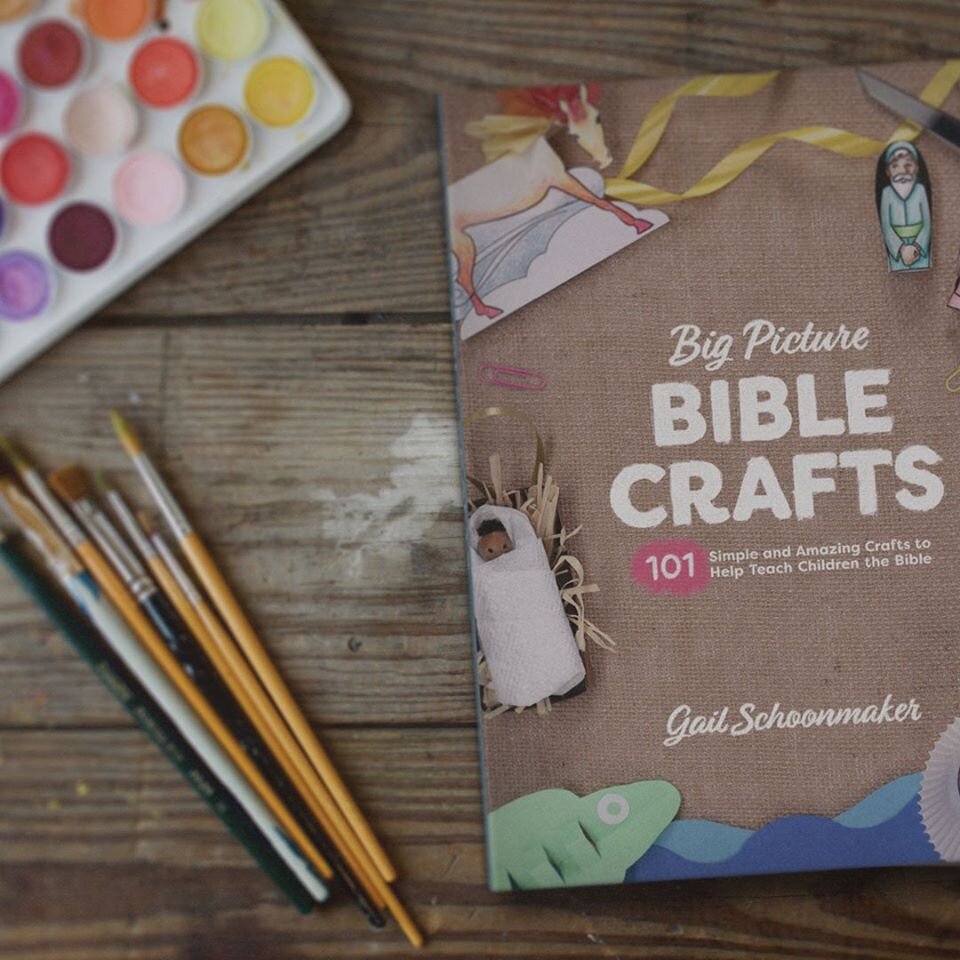
Big Picture Bible Crafts.jpg

This children’s Bible is fantastic for Playgroups as there’s very little writing on each page and it’s bigger size makes it easier to show the pictures to a group. I should admit my bias because I’m friends with the author and illustrator but Dave and Gail did such a great job of highlighting the common themes of the Bible and connecting the stories together.
Plus Gail wrote a book of crafts (designed for and used with 4-5 year olds) in which there are crafts for every story in the book.
Buy the Big Picture Story Bible and Big Picture Bible Crafts

The Jesus Storybook Bible

Jesus Storybook Bible.jpg

This is my favourite kids Bible. I love to read it to kids and it’s my go to for when I want to see how a story can point us to Jesus. Even when the story isn’t in the Bible it’s helpful to remind me of how that works.
It’s also beautifully written, simple and poetic at the same time. And the illustrations are gorgeous and a little bit whimsical. I only wish there were more stories in this.
There are so many ways to accompany this with a colouring book, an audio version and even Christmas tree decorations.
Buy the Jesus Storybook Bible

Tales that Tell the Truth

Tales that tell the truth Boardbooks.png

This is an ever increasing series of individual Bible stories all of which are suitable for the older end of the pre-school age range. I’ve highlighted the 4 stories which also have board book versions; perfect for small children with destructive tendencies! A lovely range of different perspectives on some familiar and some less familiar true stories.
There are even some Sunday School lesson plans making this series perfect for your book box at church.
You can see all the books in the Tales that Tell the Truth series here.

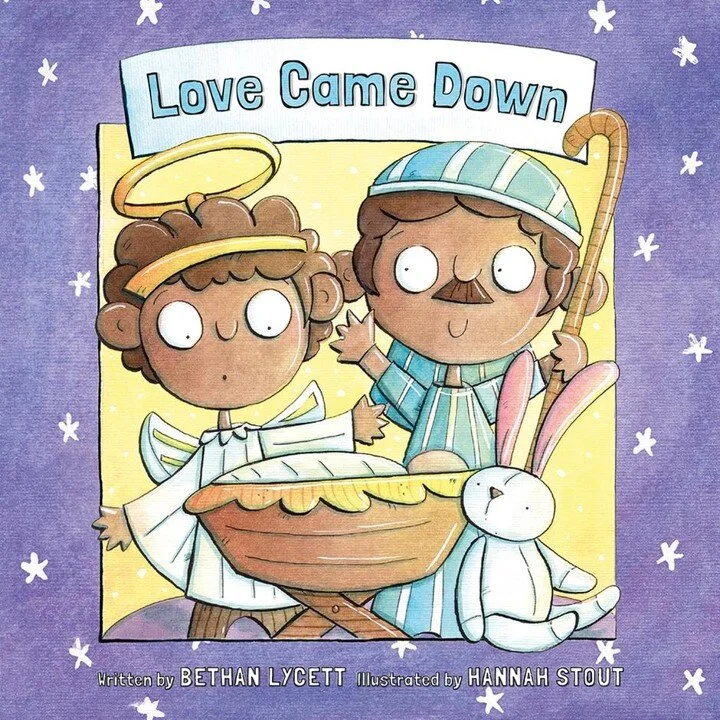
Love Came Down

Love Came Down.jpg

John 3:16 is probably the most famous verse in the Bible. In this little book Bethan Lycett has explored the different aspects of it - from the world that God has made to the son he sent to rescue it - in a fun poem for kids. It’s a great introduction to the gospel and there’s an activity book and a board book version as well.
Buy the Love Came Down books

Baby Believer Primer

Holy Week.jpg

I have to be honest and admit I haven’t read these books… yet, (getting English language christian books here can be a bit of a nightmare.) But I really wanted to iclude this series because I love this idea of teaching the basics (shapes, numbers, letters, animals…) through the lens of Bible truths. These stunning books do exactly that.
Being able to peek inside on the @catechesisbooks instagram account has conviced me that they’re such high quality and theologically sound. The Holy Week book, for example, is dual purpose; helping kids recognise their emotions and connecting those emotions to the Easter story - one of the saddest, happiest and most surprising stories ever!
Go to the Catechesis Books website.

5 Reasons Timelines are Fantastic

  1. History made visible
    There’s a reason that history teachers use timelines in their classes. It’s because it’s hard enough for us to remember our daily plans without writing them down, let alone the passage of a hundred or a thousand years. A timeline shows us what happens, in the right order, and gives us an idea how long ago.

  2. The Bible made visible

    The Bible isn’t exactly in historical and a timeline can help sort out which prophets spoke when, but more excitingly you can see the whole picture of salvation unfold, and you can see where the story you’re reading fits in this big picture.

  3. History is connected

    It’s amazing what you can fit on a timeline if you want to, although it’s not possible to put all history on it. I would recommend adding either big categories (Bronze Age, Iron Age, Roman Empire) to it, or specific events (Stonehenge built, Alexander the Great lived). Details like these, especially if they connect to what they’re learning in school, emphasise the historicity and reality of what happened in the Bible.

  4. The Bible has patterns

    One exciting thing you could do with your Bible timeline is to highlight some of the themes which run throughout the Bible. Imagine if you could see every rescue highlighted in red and each sacrifice in blue on the wall of your Sunday School room!

  5. Walking through the Bible

    Probably my favourite thing about the timeline is that you can add to it as you go along, each time you read a story with your class you can find it on the timeline, you can add the connections to history outside of the Bible at the start of a new term, you could add picture or key words as you go along, and you can always use it to help remind your class of what happened before and what is still to come.

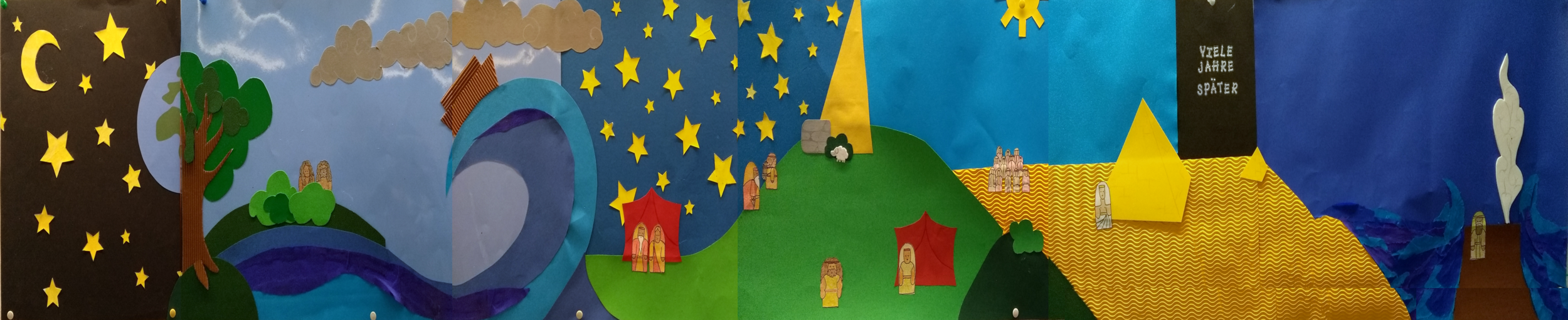
A picture timeline of key moments from Genesis.

A picture timeline of key moments from Genesis.

This pictoral timeline can’t contain all of the information that a classic one could but it is great for knowing where your story fits. You can see how to make it here.

Why are young people leaving the church?

I’ve been uploading the first youth group series to this blog over the past couple of months, and I’m glad we started by Exploring Ephesians. But there are more aspects to running a youth group then just having a good Bible study series…

Claire Williams at Get Real has identified 4 reasons why Millenials and Gen Z are leaving the church, and even more crucially directs us to some ways to combat these. I would 100% recommend watching her Youtube series and having a conversation with your Youth group leaders and young people about

  • Disillusionment,

  • Deconstruction,

  • Disengement, and

  • Decollonisation.

These do also mesh quite nicely with the themes of mission, unity and christian living which we find in Ephesians, so do have those conversations!

Here are some easy questions to follow up the videos:

  • Is this an issue which young people, in your experience, do care about?

  • Is this something you personally feel strongly about?

  • Where do you as a youth group or Church fail to connect well with this issue?

  • What is a first step you can take to engage with this?/What would an ideal way of connecting with this look like?

  • Ask God to help youbuild relationship with young people in and outside of your church.