

How to make a worksheet work
I’ve seen a lot of worksheets in a variety of churches and it usually goes one of two ways:
The kids get a worksheet, they do the worksheet, they ignore everything else going on in the service and there’s zero relationship between the two except for the Bible passage.
The kids get a worksheet, the preacher preaches and repeatedly stops the flow in order to tell the children exactly what to write on their sheet.
I’ve been responsible for both of these things and neither is a disaster or a failure. But I believe there is a better way!
We had a sermon series on Elijah over the summer which the school-age kids were in for every week. But since I was away on camps for part of it I didn’t want to have to design a unique worksheet every week. I think someone mentioned to me afterwards that a particular week had worked very well for their child in understanding the sermon, so with Scott’s permission I’m sharing how I created the worksheet and how he used it to help people, particularly the younger ones, to understand the passage and therefore to glorify God.
Below you can find the sermon and worksheet as a sort of worked example - a time that the co-ordination of worked really well and then some of the ways we achieved that synergy (probably the first time I’ve used that word without any irony!)
Not too detailed
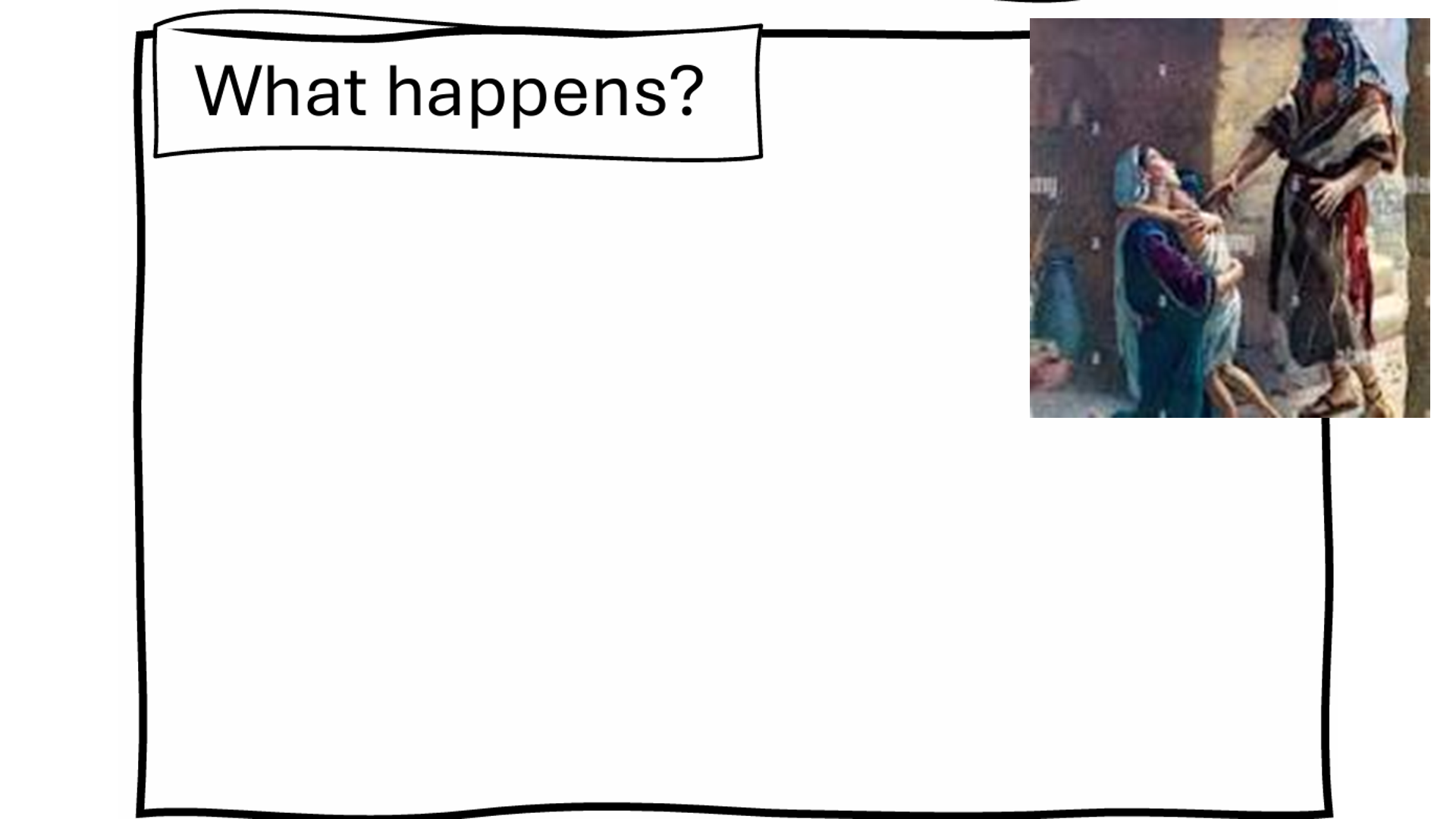
This one we discovered accidentally, because I was designing for multiple texts not just one, but it helped in more ways than I expected. This is the worksheet I designed (I have since spotted the grammatical error but I decided not to change it because no-one’s perfect).
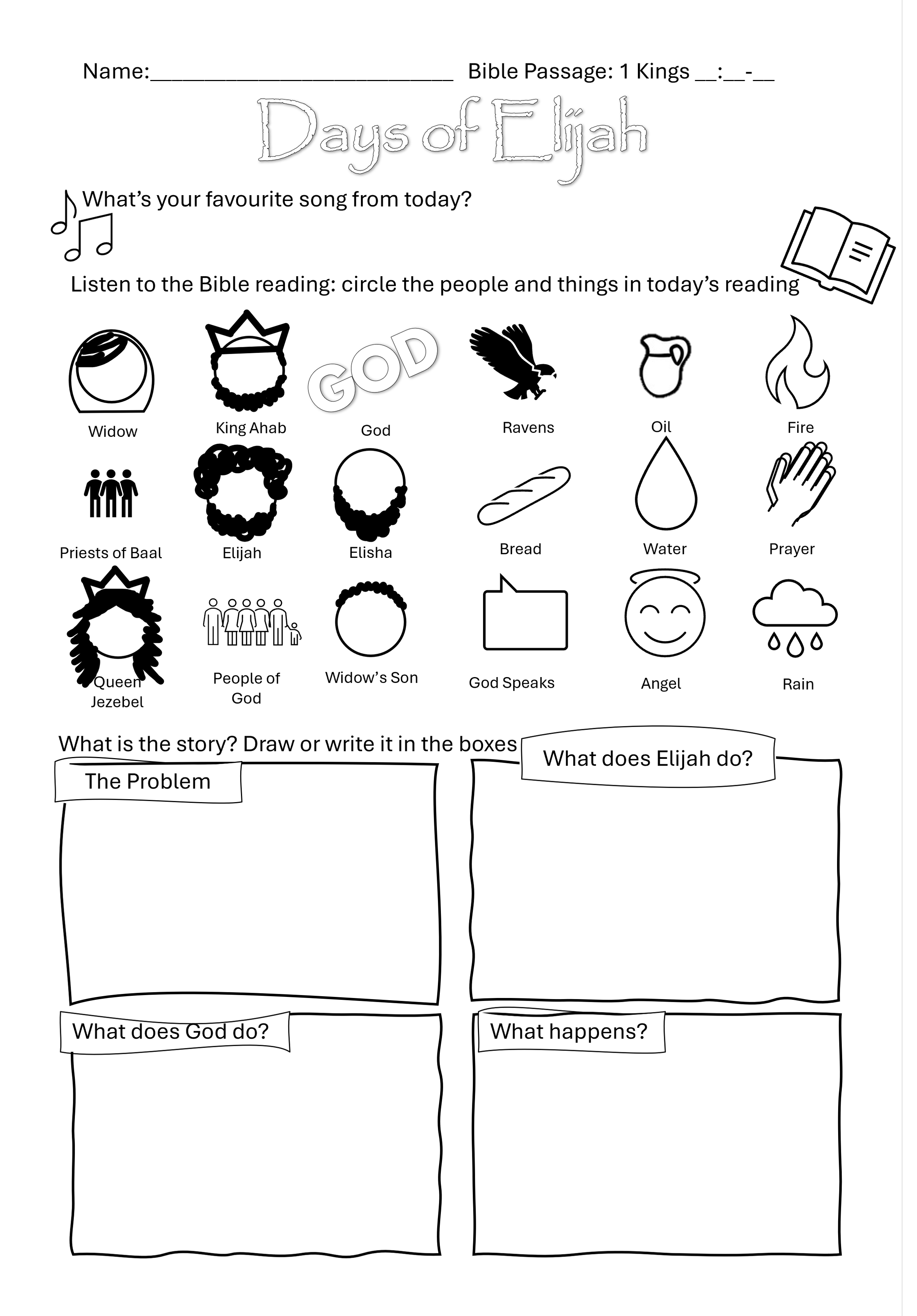
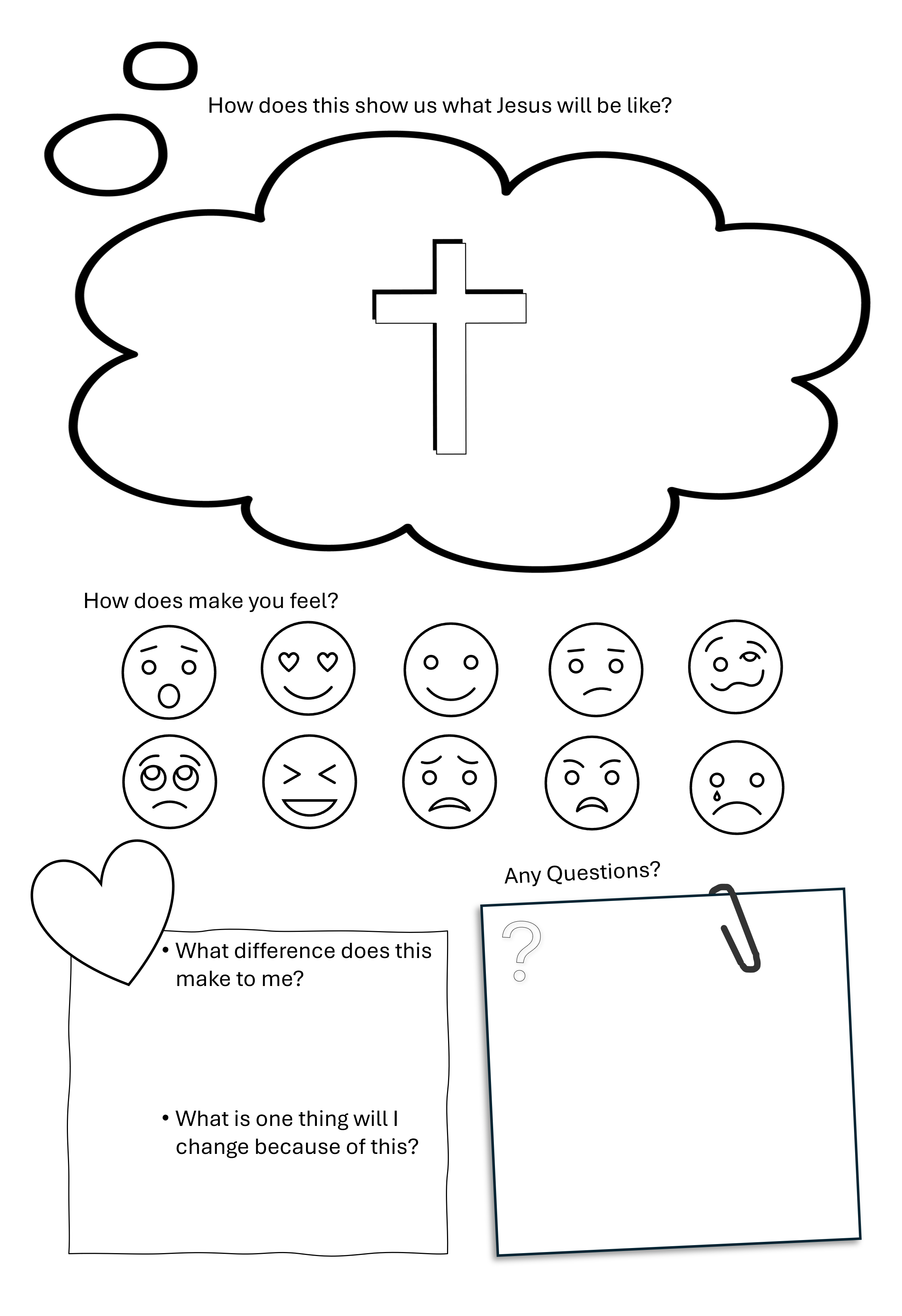
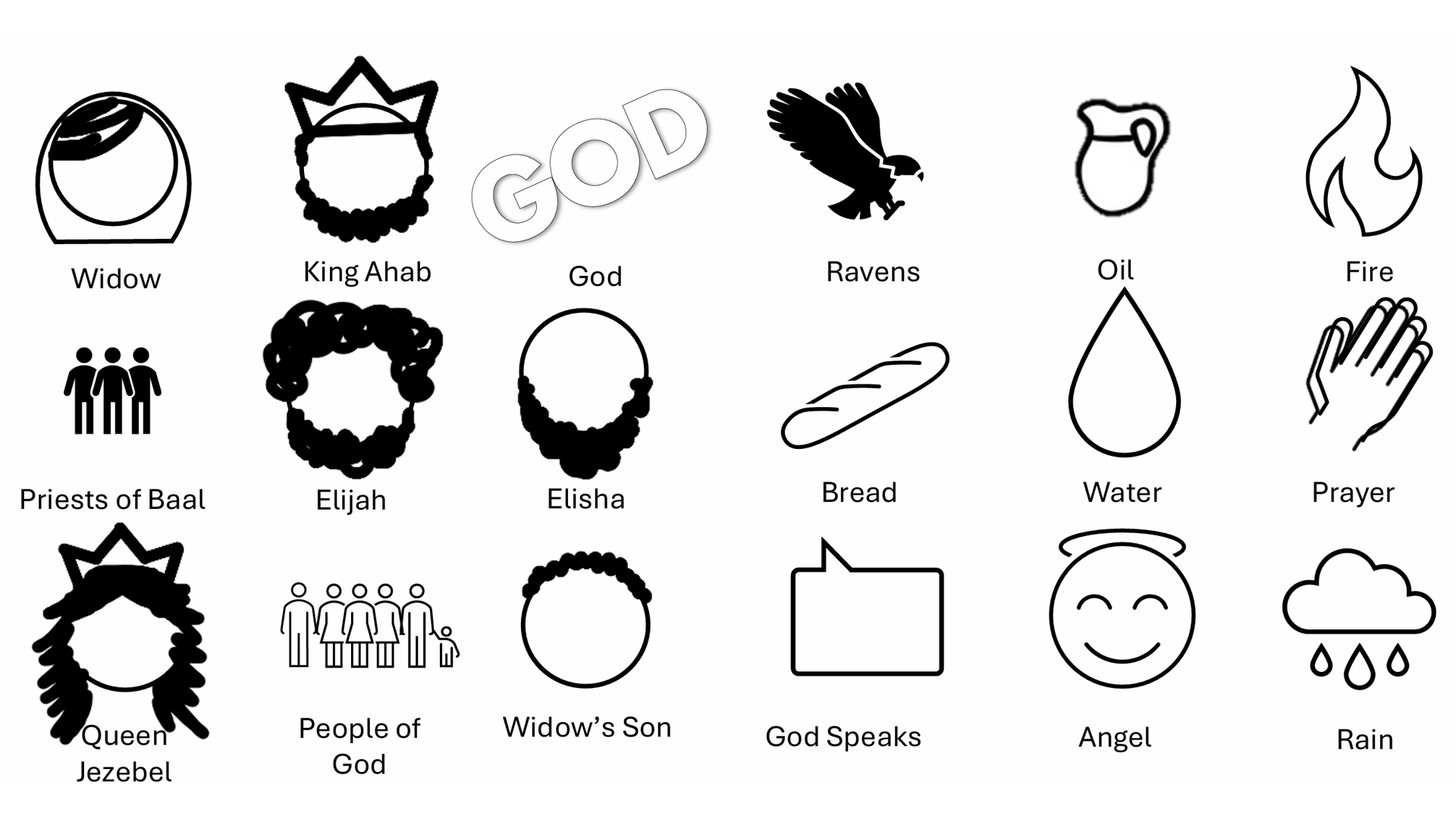
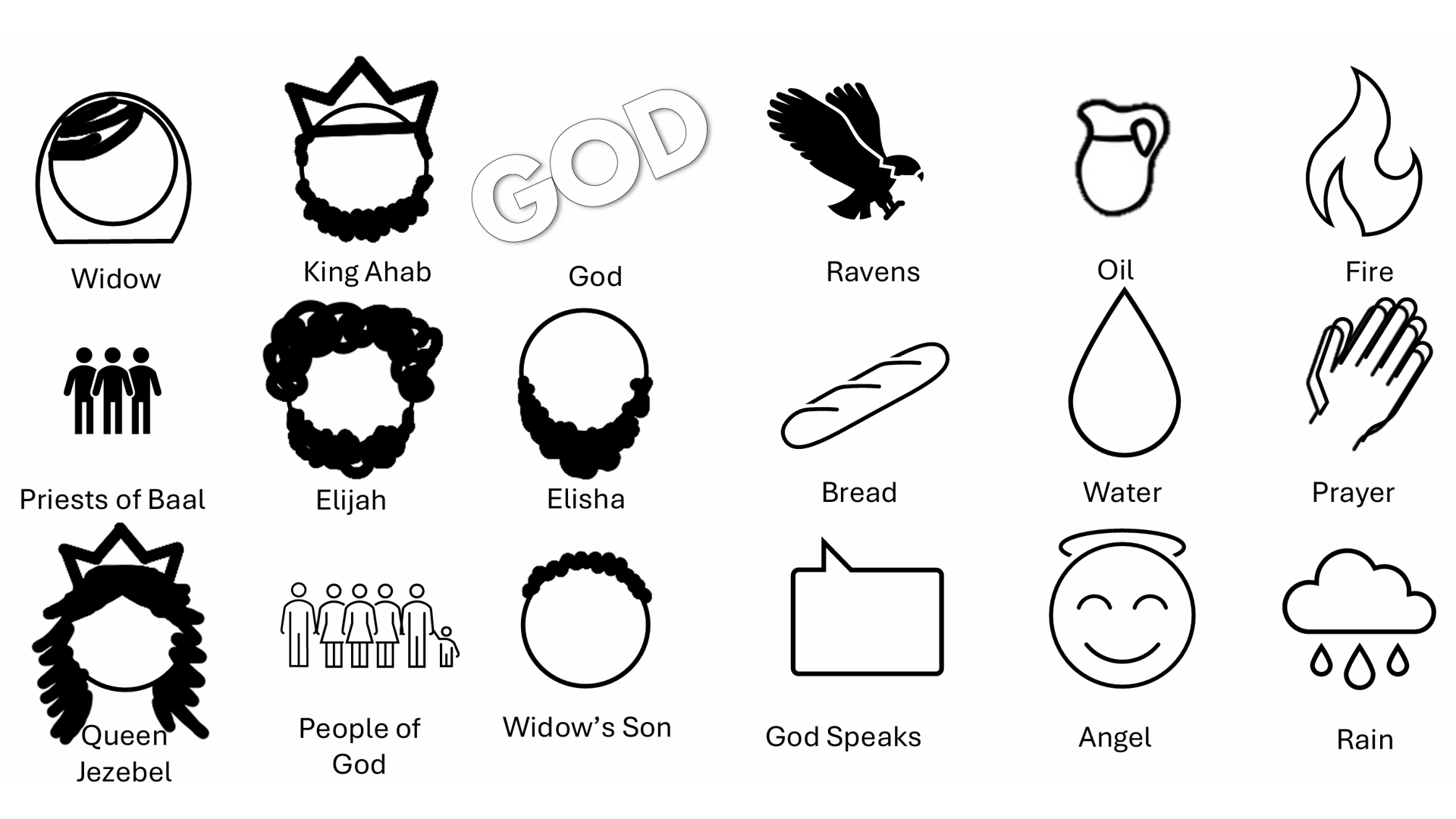
The more open ended nature of the worksheet led to a tracker of characters/actions/objects in the text, the bonus is that this gives the kids a reason to listen to the reading as well as the sermon every week.
The open space lets them describe the story, which works well as a reminder of what the key events are and for those who don’t write gives them enough space to draw something simple. It also leaves room for a preacher to point out two problems that have one solution, or more than one thing that God does. There’s also a small amount of theology, which I knew would be in any sermon - the story isn’t only about Elijah, it’s about what God does!
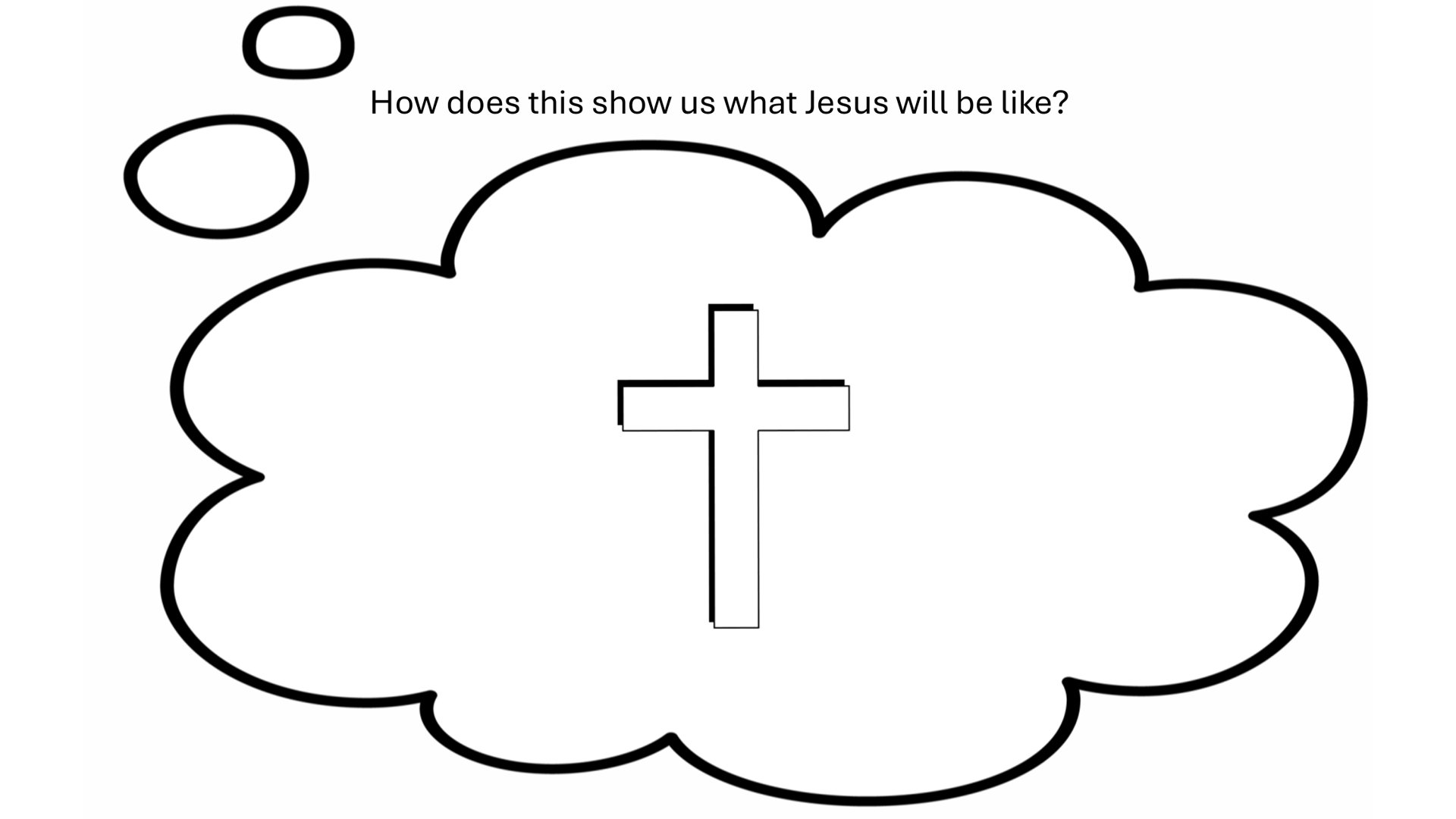
The most difficult part of this was how to bring Jesus into the worksheet because I fully expected him to turn up in the sermon, but not exactly how. So I kept it broad, ‘How does this (Elijah, Ahab, God’s action, a widow’s son, bread…) show us what Jesus will be like. And then whoever is preaching has the possibility of adding as much or as little detail as they need.
Interactive
A couple of times Scott pointed out where we are on the worksheet; helpful and necessary for younger children. But he went beyond that and makes it interactive for everyone by getting them all to do the task at the beginning: the children have a head start, which gives them confidence, but can also add to their worksheet anything they’ve missed.
Interaction isn’t only limited to things on the worksheet, of course! A ‘talk to the person next to you’ or ‘does that remind you of anyone?’ engages all-ages to pay attention and think about what’s going on. But for children (and adults) who might get lost if they were just listening having matching visuals on the screen and in front of them helps them to know what’s going on.
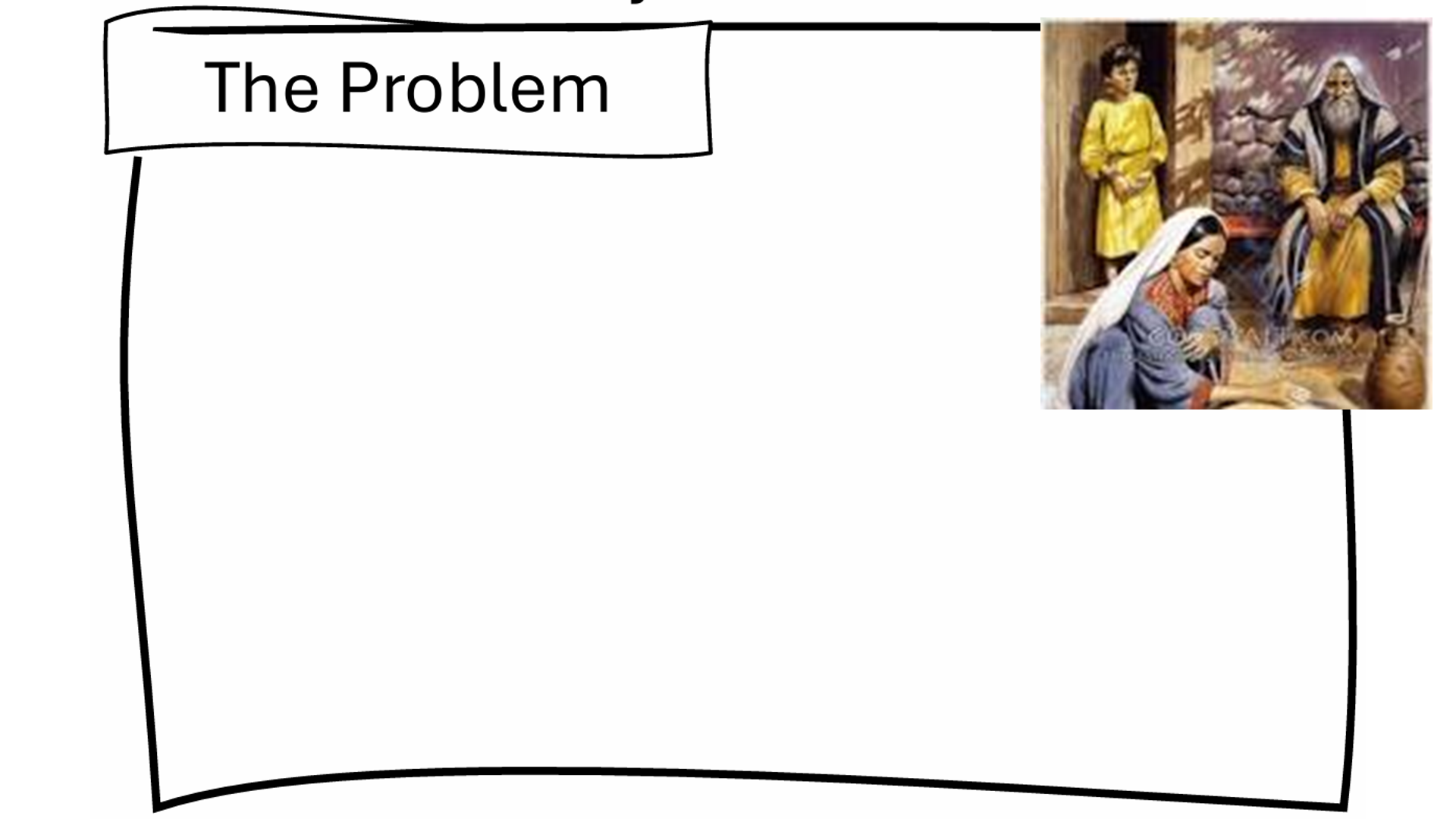
Crucially Scott doesn’t have to point out every time where we are on the worksheet, just by using to same phrasing we can follow along. On other worksheets I’ve coordinated pictures on the sheet and screen, sometimes the preacher has put them on their powerpoint and I’ve copied them, at other times I’ve doctored their powerpoint to add simple pictures from the worksheet.

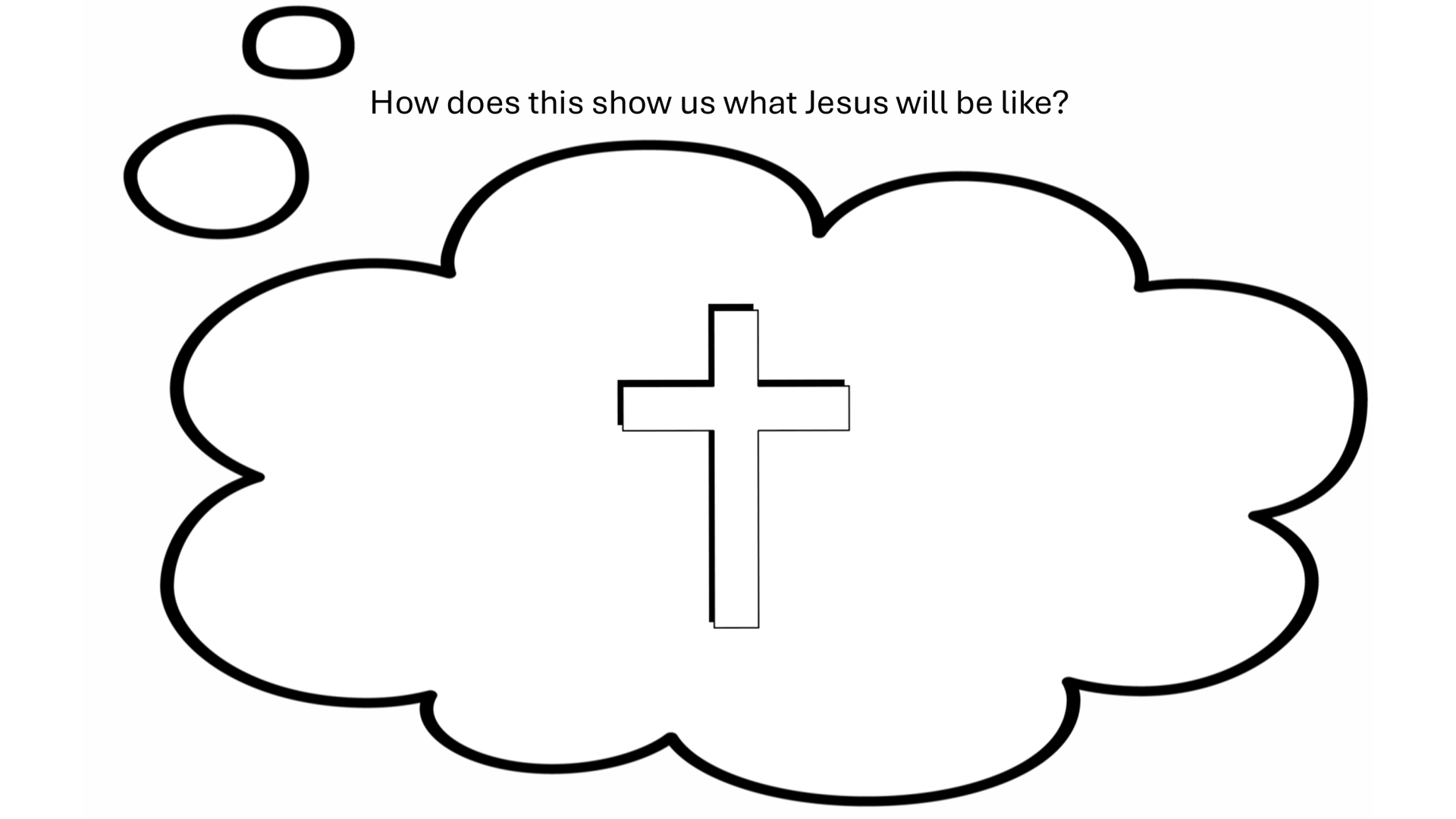
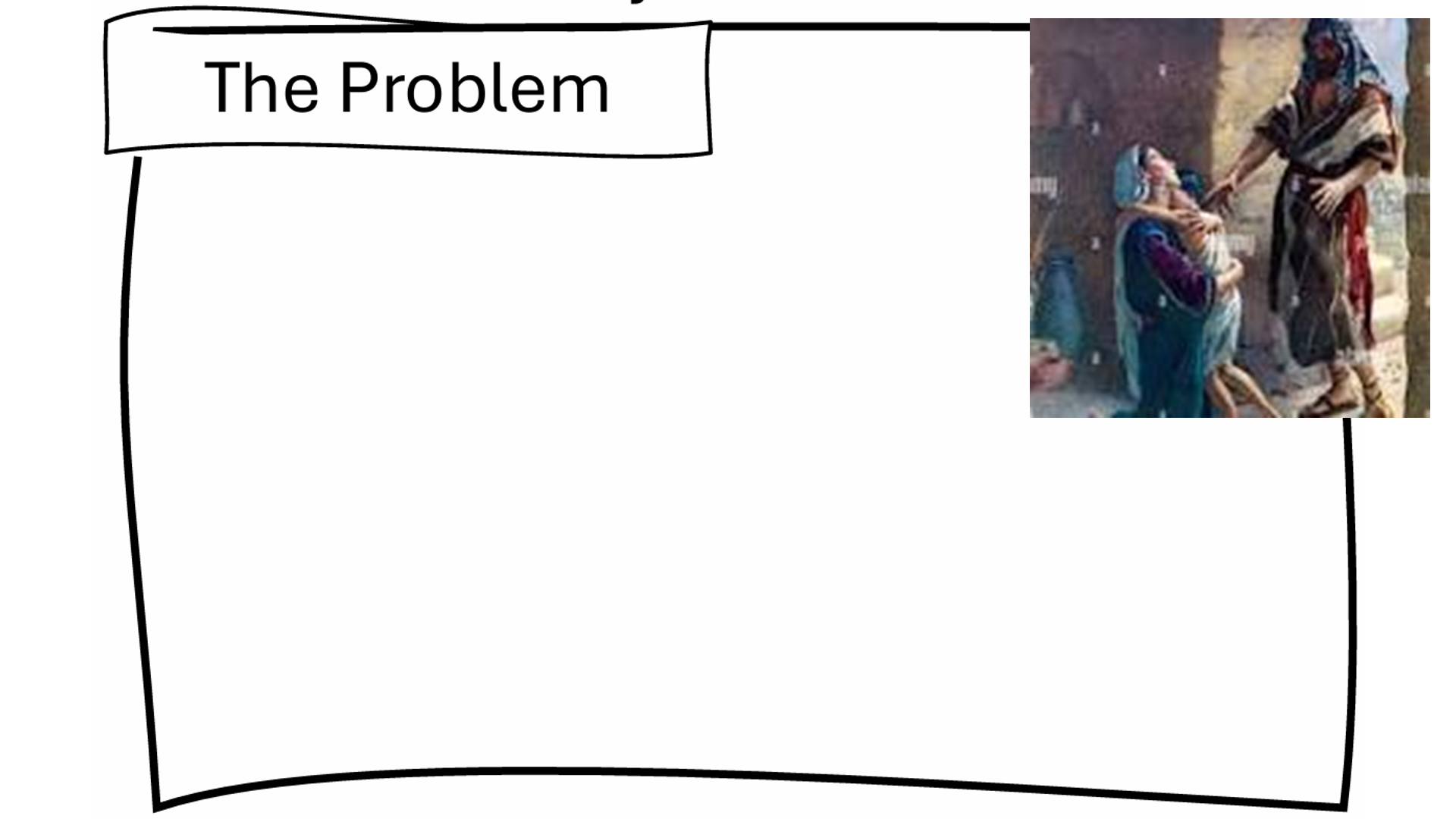
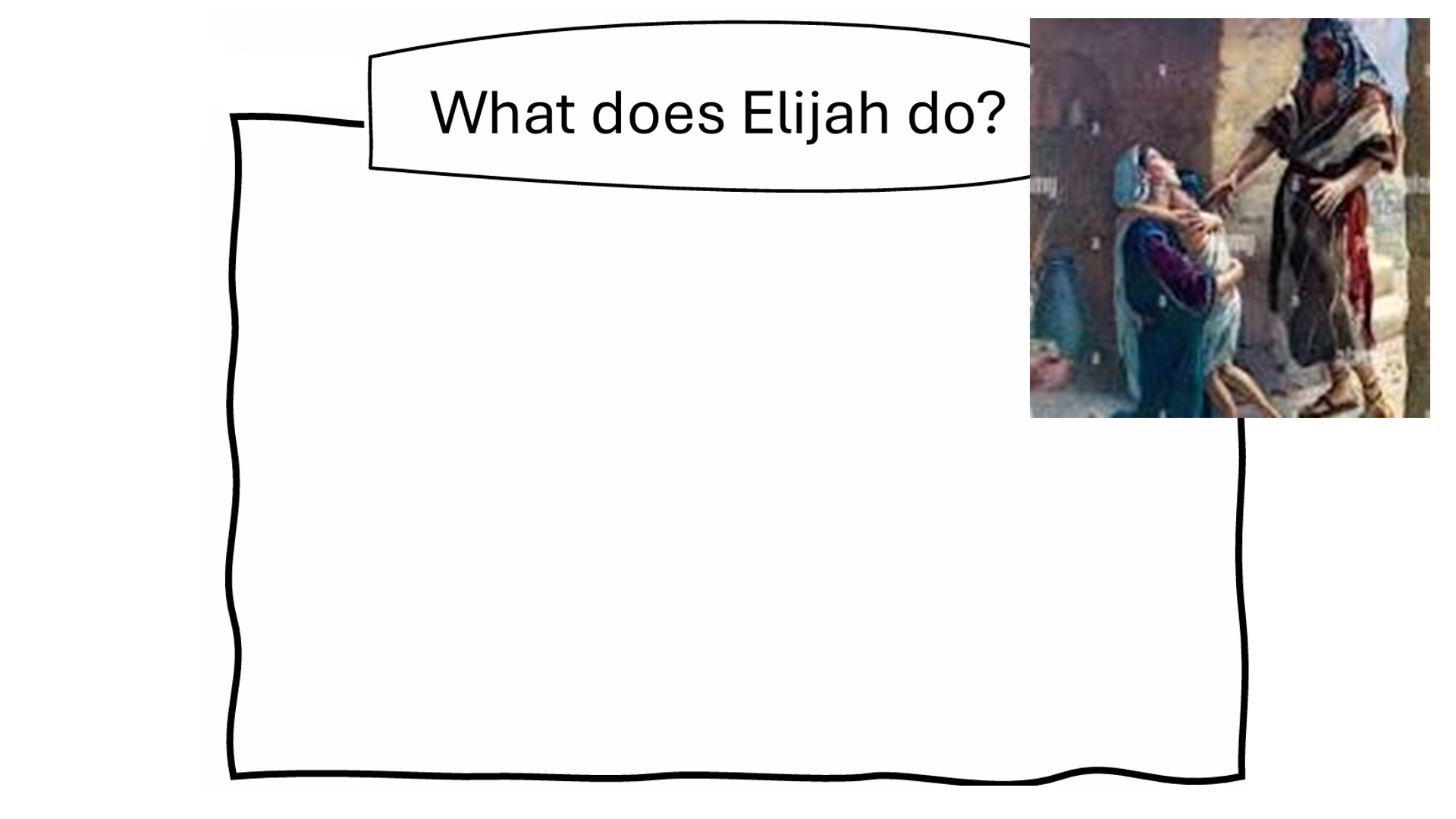
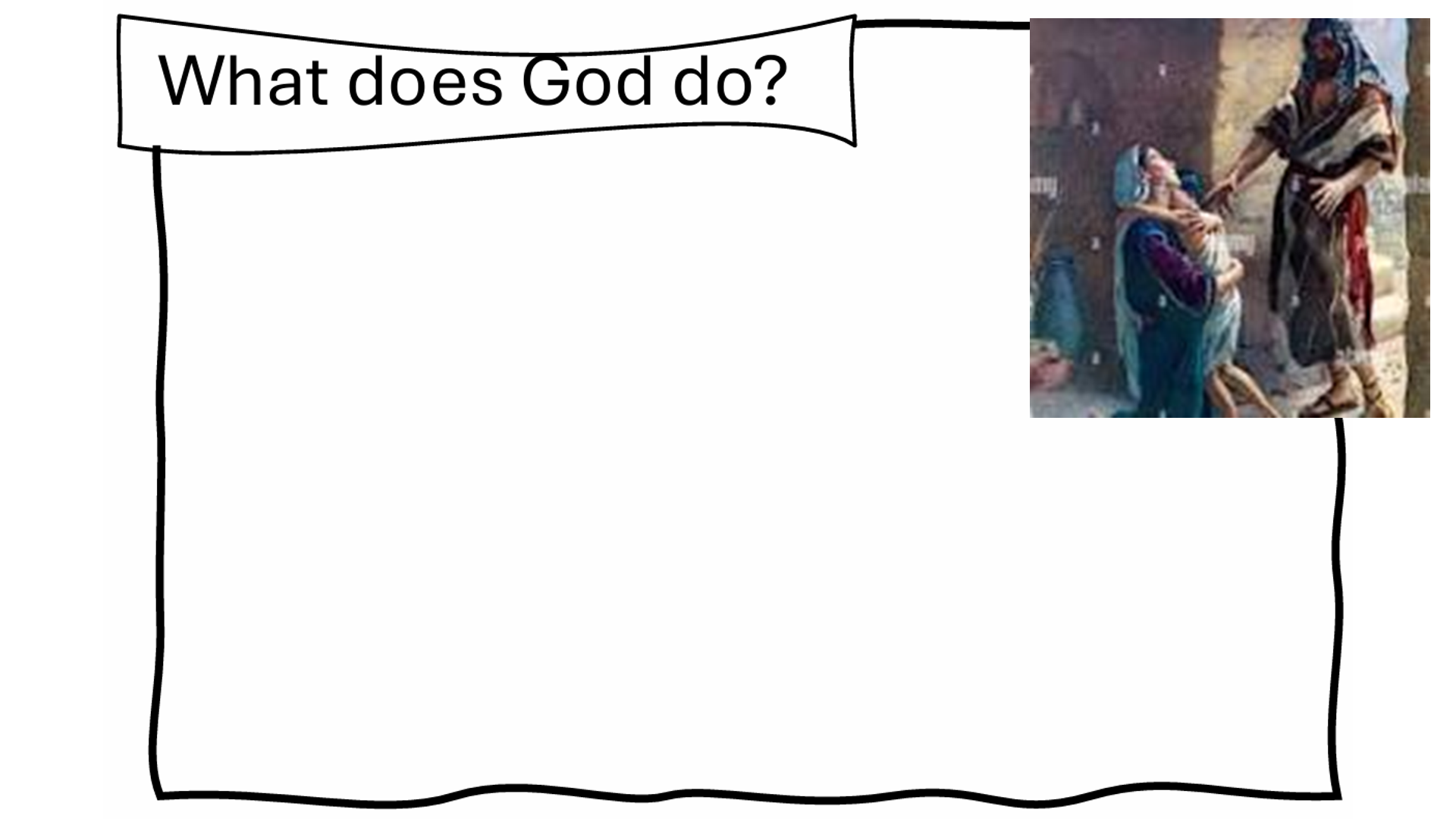

SAME Structure
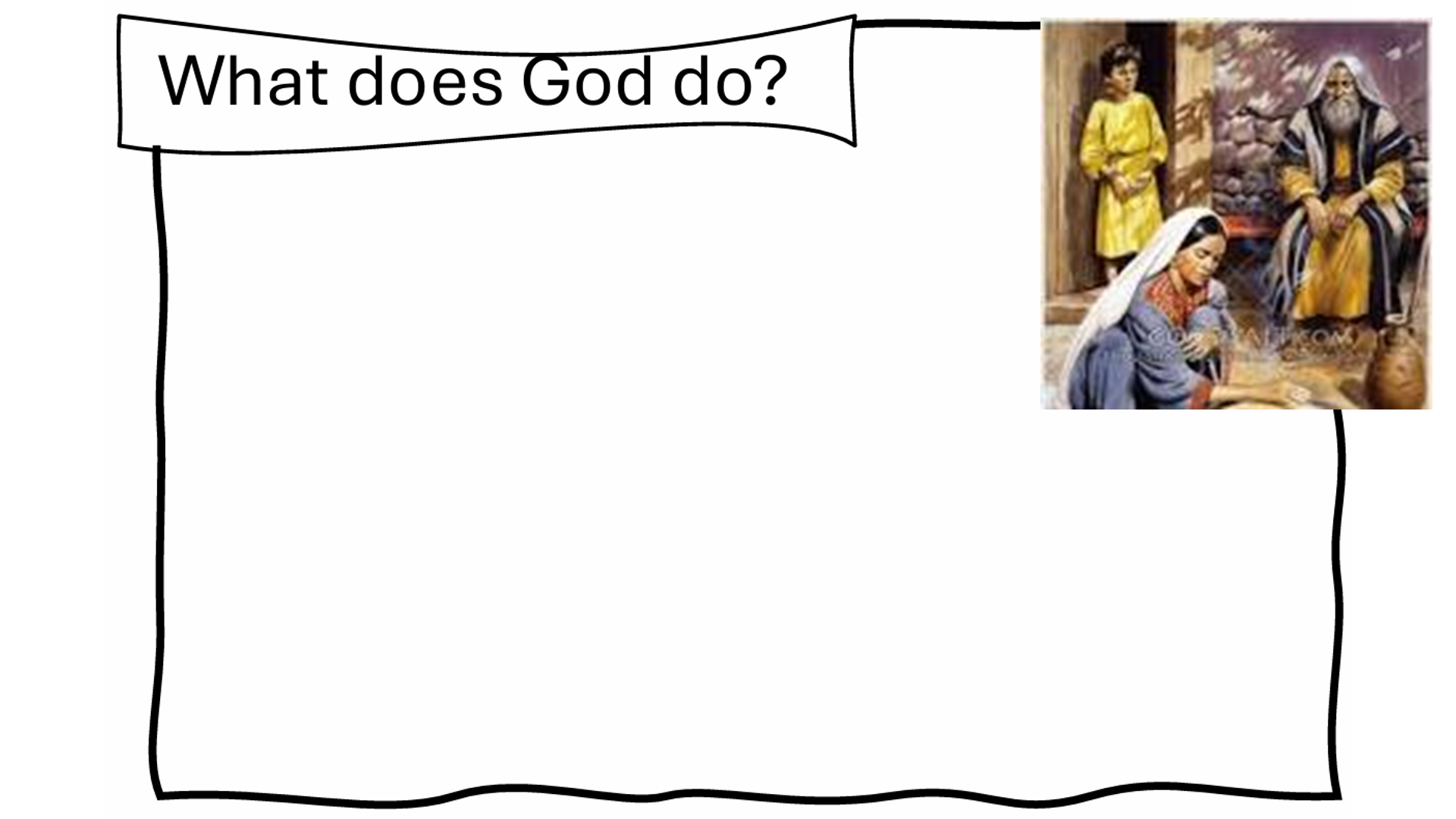
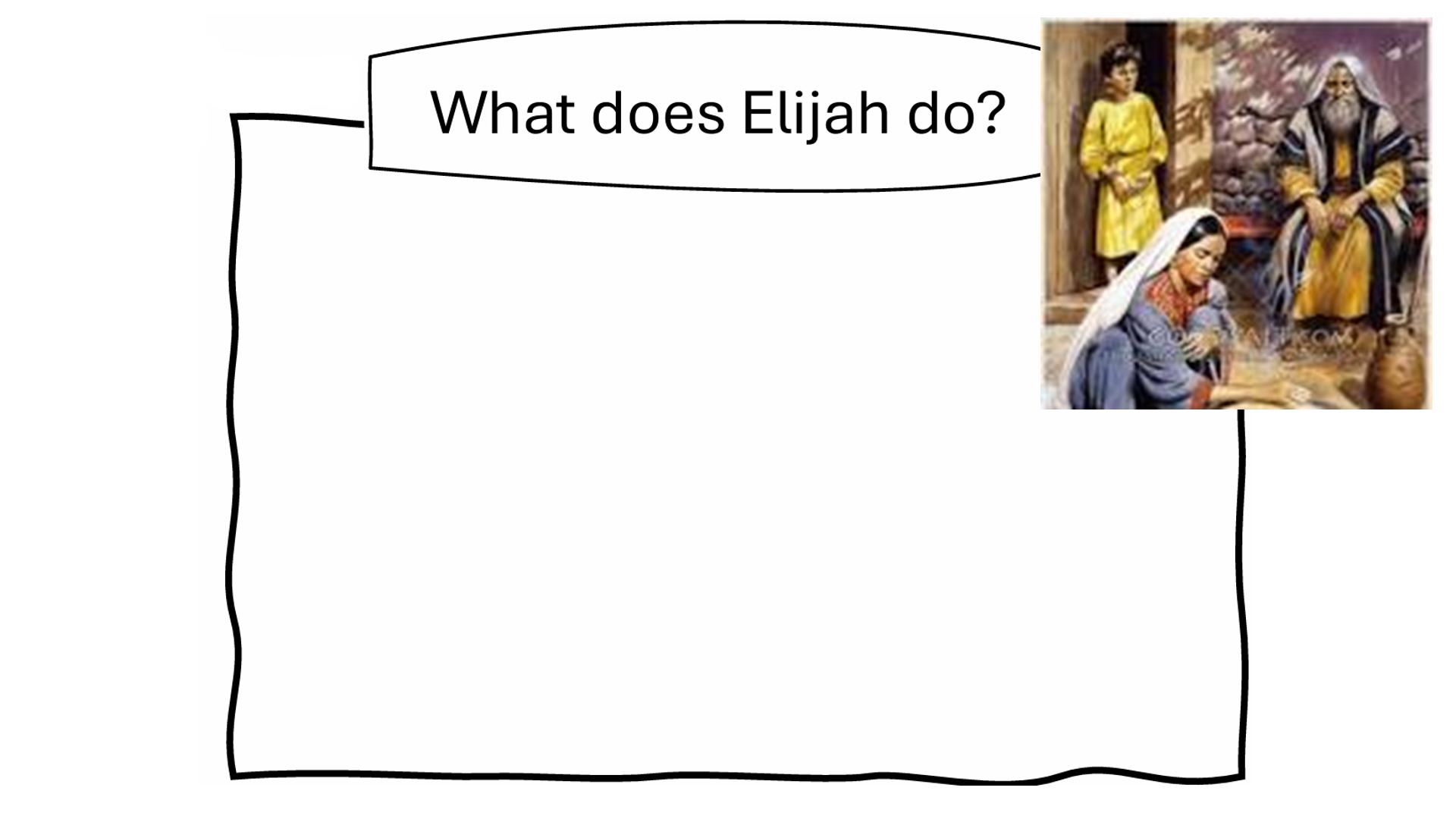
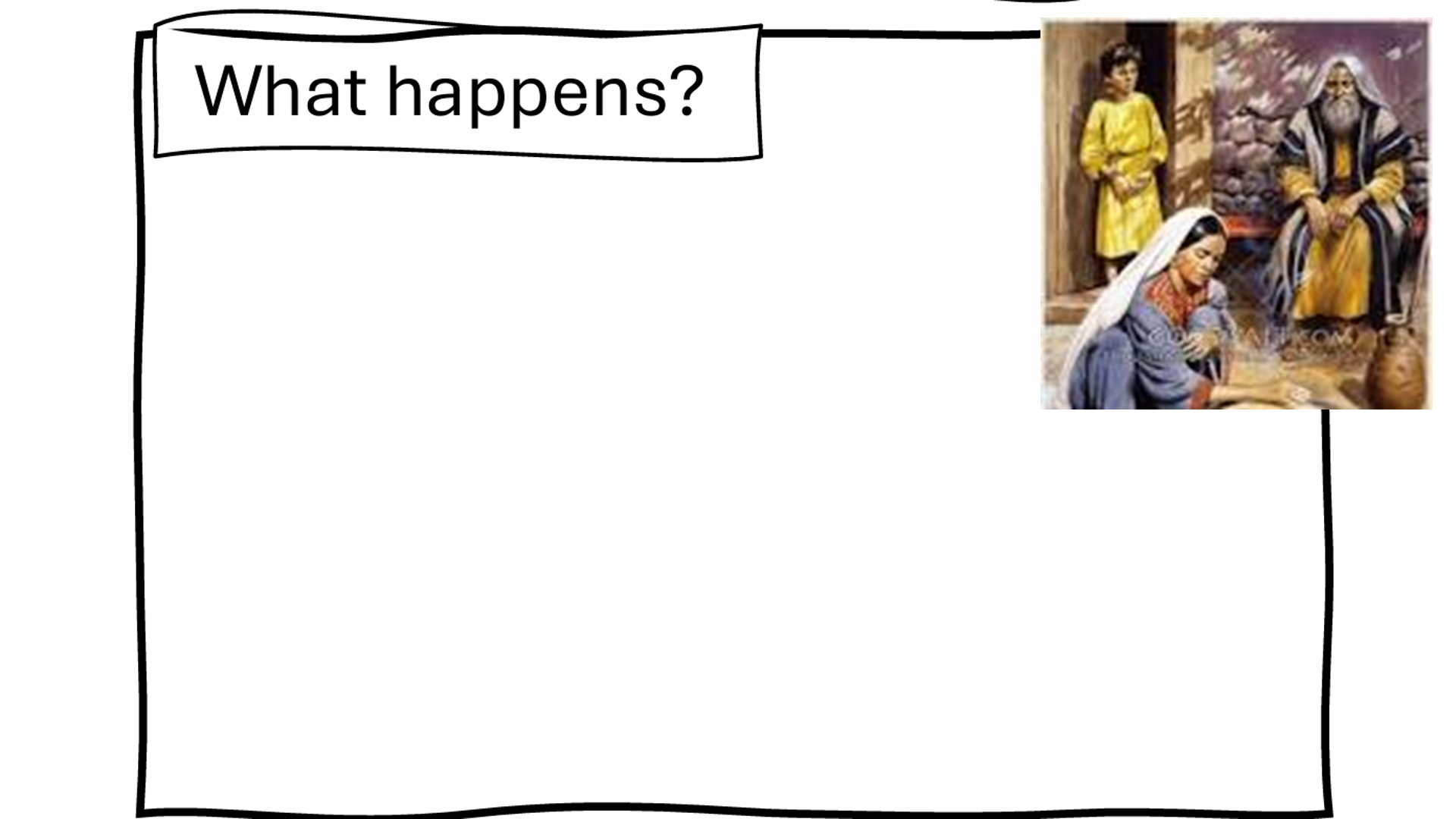
Not having to point everything out can also be achieved by using the same structure. In this case it went like this:
Problem -> What does God do? -> What does Elijah do? -> What happens?
And the layout is flexible enough that Scott can use it twice in two different ways; having the boxes in a square rather than a line means you could instead go this way round:
Problem -> What does Elijah do? -> What does God do? -> What happens?
After all the Bible passage should provide the structure not a worksheet!
But using the same structure for both really helps with being able to follow along. In this case I’d created the worksheet first and Scott was able to use that. There are other ways of achieving this; if the sermon can be written enough in advance and plenty of detail provided the worksheet can be written specifically for the sermon not just the text. Or if that’s unlikely to happen (because preachers have a lot to do aside from on Sunday mornings) you could provide a buffet of worksheet options and the preacher can pick and mix the sections which would fit their sermon and compile it themselves.
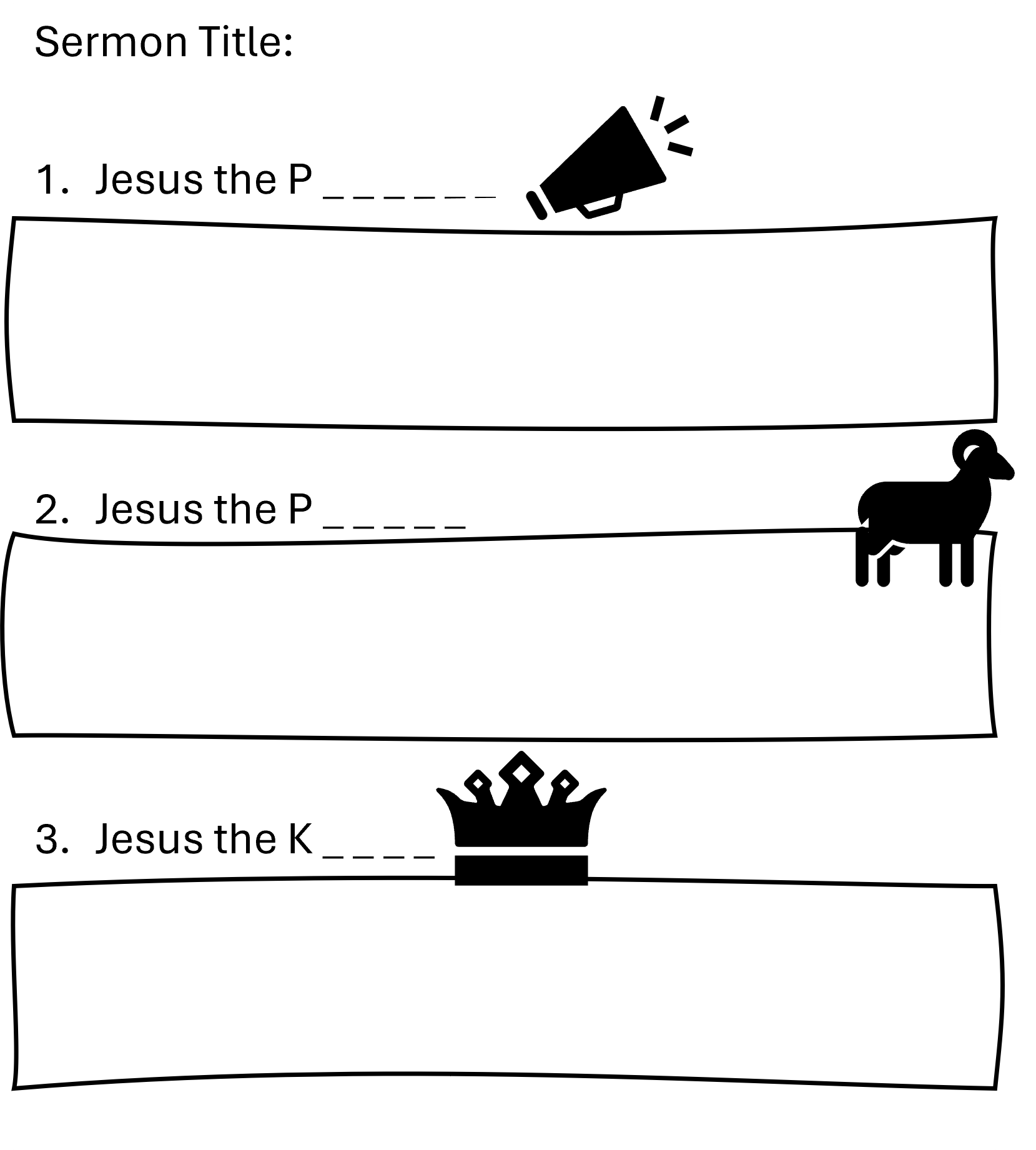
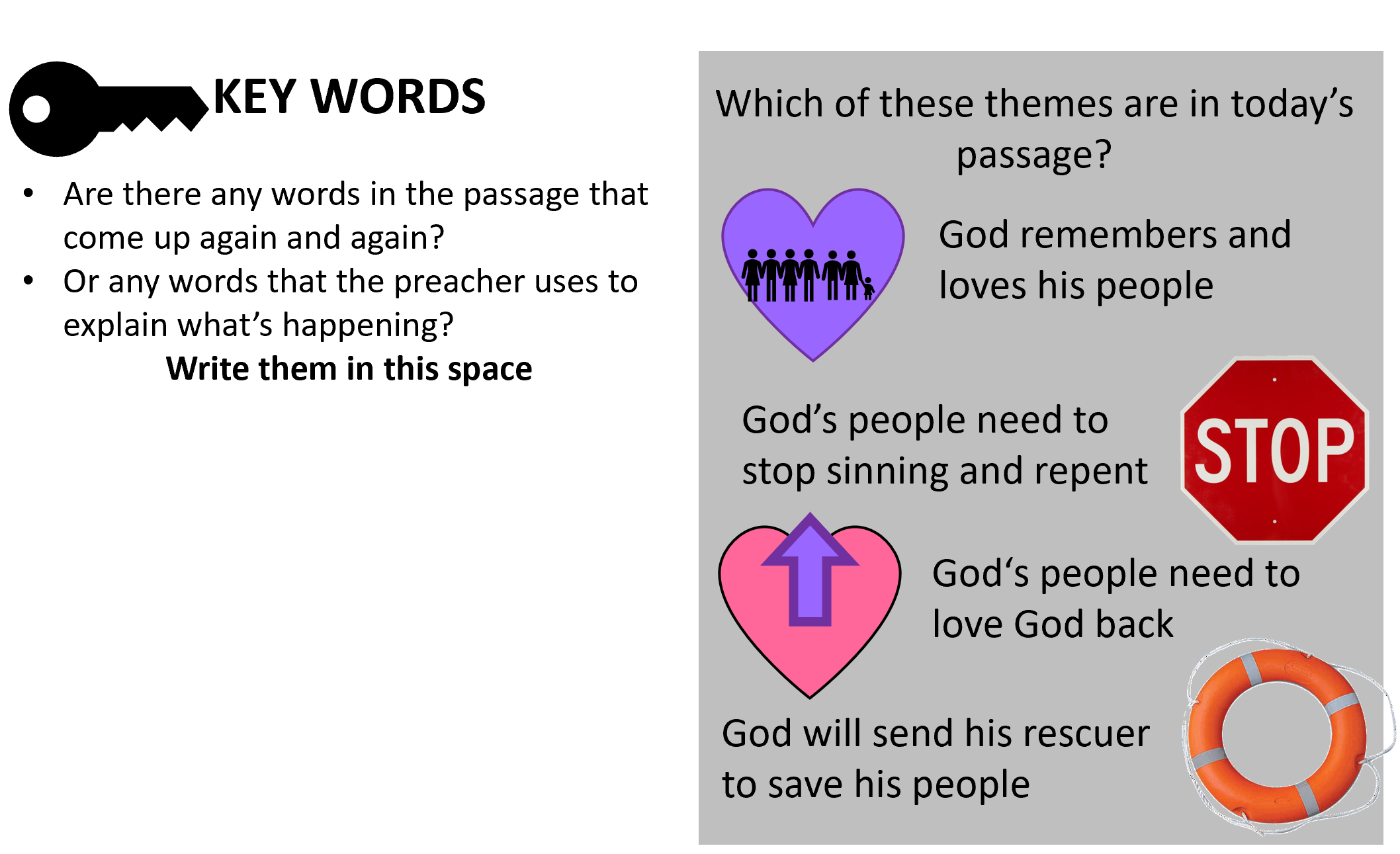
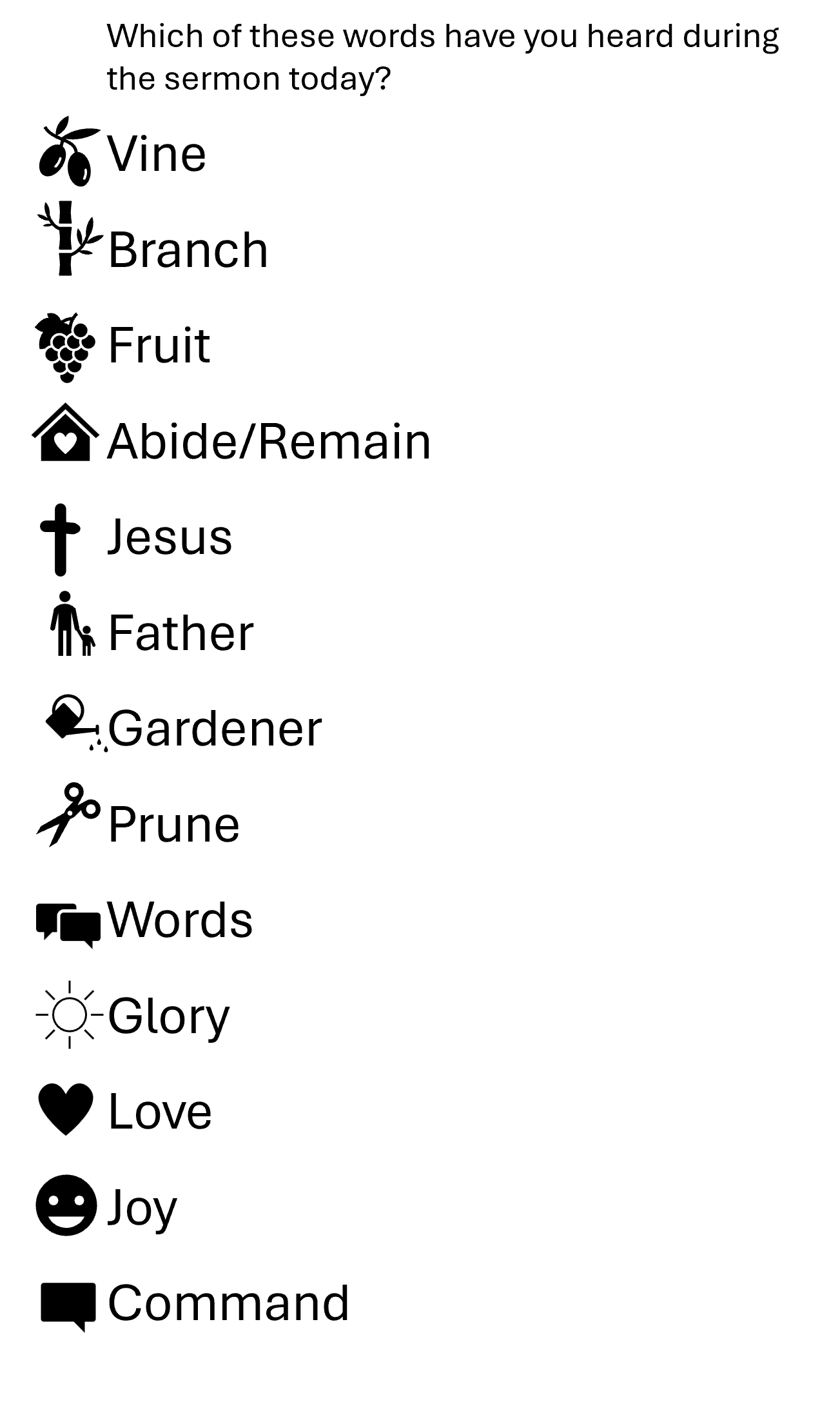
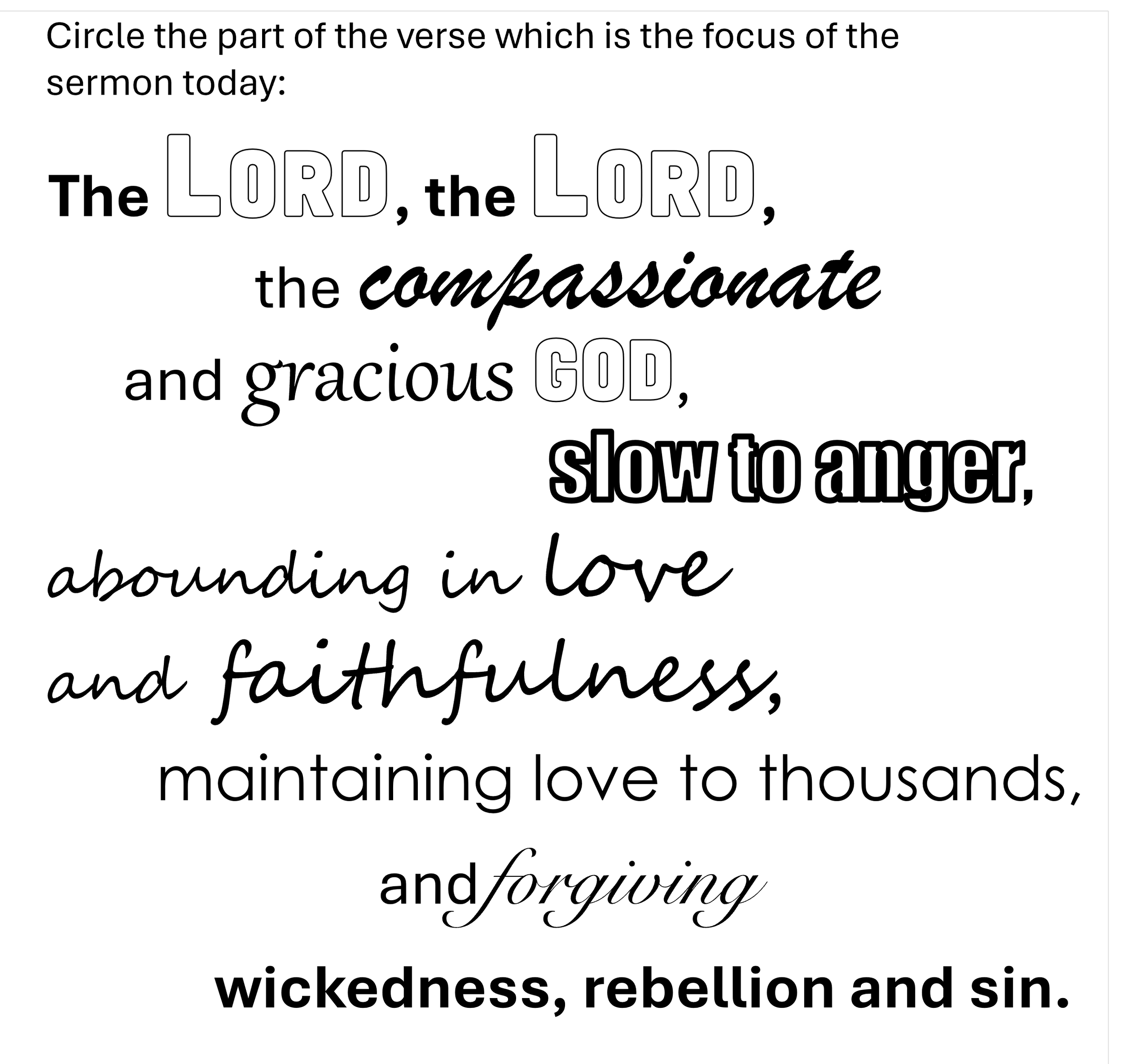
This particular smorgasbord are ideas taken from various different sermon worksheets, so definitely not on theme:
Not only a worksheet
Not everything in the sermon has to be on the worksheet. Details which the adults are interested in and may find helpful, such as where this takes place and which gods were worshipped there, don’t need to be on the worksheet. Having a visual representation of either or both on a screen is helpful, but since it’s not a key point it doesn’t need to be printed out. For both adults and children there is much more going on in the sermon and the service than the worksheet.
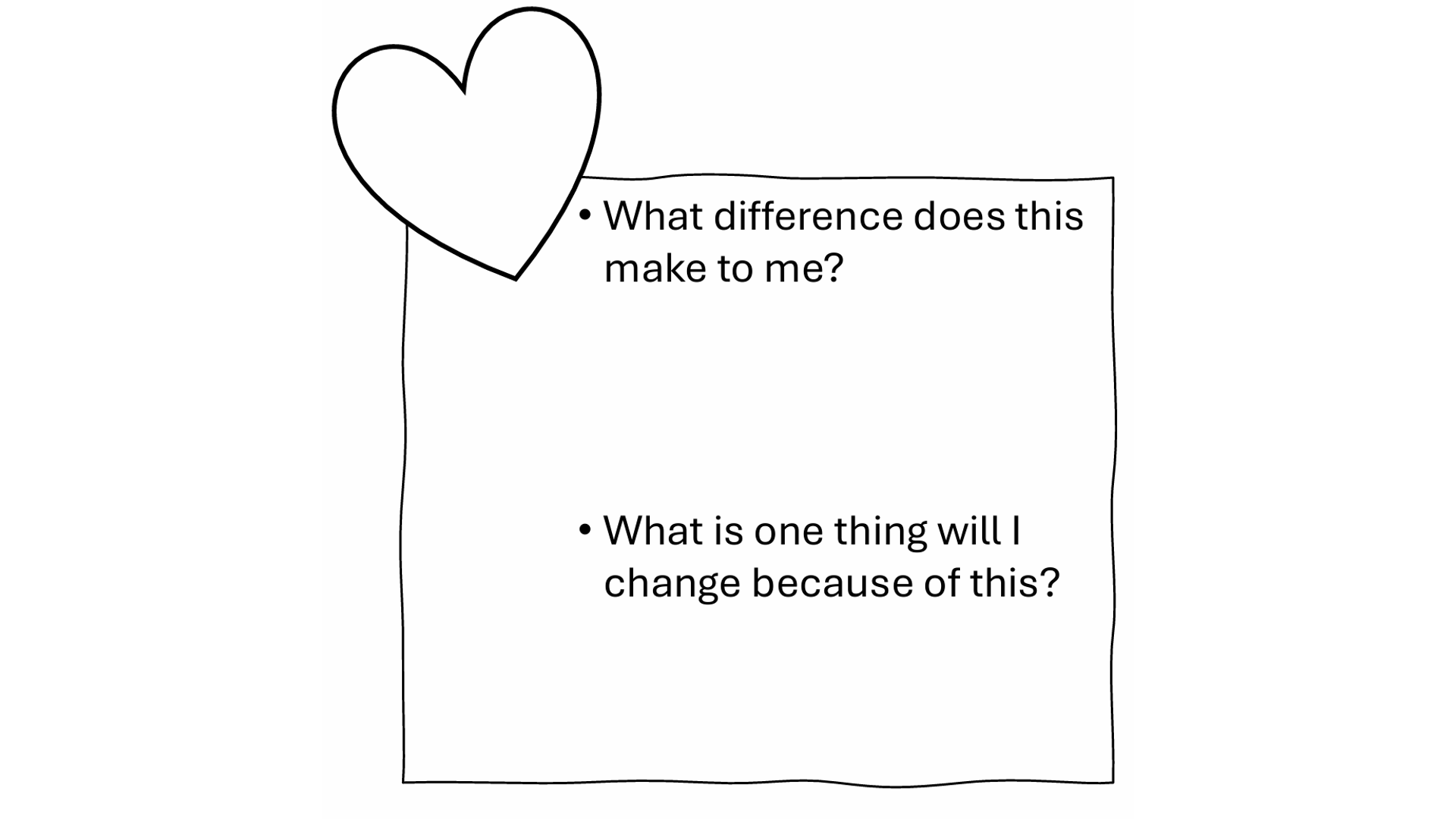
Scott also speaks directly to young people in the congregation, and to the older people, but neither for very long so that no-one has time to think ‘this isn’t for me’ and switch off. Whatever the thing is for listeners to think about might not be on the worksheet, but it could plausibly fit in a box or in the application section on the second side, and an older, or switched on kid has the option of writing that in so they don’t forget later. After all many adults, like me, are compulsive note takers during sermons so that they can follow along and remember what’s important.
With Help
Not only does help come from the front, in terms of keeping kids aware of where they are in the story, but it can come from the congregation as well. A short amount of time to discuss with the person next to you can be done among young friends. For application questions it might be valuable to have a responsible adult nearby to help them think about it and to model what this looks like. Parents and guardians are naturally well placed to have those conversations and often families sit together. But volunteers from children’s and youth ministries can be asked to seat themselves near groups of kids/teens to help with this.
Quietly whispering the questions to a kid who struggles with reading can help. And while I haven’t tried this yet, I’d love to recreate a worksheet on a flipchart, place it near where the kids congregate and demonstrate how I would fill it in. But this can also be done by any adult with a worksheet sat next to a child.
Not just for children but not not for children
There’s nothing childish going on in either the sermon or the worksheet, it’s focused on God as revealed in the events recorded in the Bible. So Scott is free to describe Elijah as an intercessor (a grown-up word) but, for the children and those unfamiliar with Christian terms, he briefly explains what that means as demonstrated by Elijah and, wonderfully, Jesus. It’s the big and beautiful truths made simple, but not small, so that everybody can understand them.
It also turns out you can give worksheets to anyone, we ask people to make sure the kids have one and then offer the spares out. There’s one lady in her eighties who always takes one; not to write on but because looking back at it later helps her to share the sermon with a friend who isn’t able to make it to church. Some of the students really like them too. I’m delighted about this because it shows the kids that this isn’t something we’re doing because they’re too dumb to understand (they are not!) but because it helps people. Some of us are note-takers, some are doodlers, some fiddle and some just listen. It’s important to do whatever helps you to take in to God’s word.
I do think a well designed worksheet can be a real help both to the preacher and to the people who fill it in. It’s going to create extra work for somebody, and most likely you’re all over extended already, but think of the rewards:
kids who grow up learning how to listen and engage with the church service
better understanding of the sermon
help for preachers in communicating with kids
I don’t expect every worksheet to be a banger, and I still have lots I want to try out and to learn, but this has encouraged me so much to see that worksheets can work and work well!